If the sealer on your Southwest Florida pavers is peeling, cloudy or turning white, another coat on top fails the same way. We strip every layer back to bare paver, treat the efflorescence that was hiding under it, then reseal with Inseco Sealthane. Strip and reseal is quoted and warranted as one job. Call (941) 237-8107.
Strip it down. Start clean. Seal it right.
If your sealer is turning white, peeling, flaking, or trapping moisture, all common signs in Southwest Florida's heat and humidity, it's time to strip. Resealing over failing sealer just locks the problem in and the new coat fails just as fast.
When old sealer turns white, peels, or traps moisture, the only real fix is a complete strip and reseal. We remove every layer of failed sealer down to bare paver before the full sealing process starts. We never seal over the problem. The surface that comes out of stripping is clean enough to accept a sealer coat that will actually last.
Failed sealer looks bad, and it damages the surface beneath it. When sealer begins to peel, bubble, or turn milky white, it creates pockets where moisture gets trapped between the sealer film and the paver face. That moisture cycle, absorbed under the film, expanding in heat, unable to escape, accelerates spalling, discoloration, and surface degradation far faster than an unsealed paver would experience on its own. The only correct response to failed sealer is complete removal, not another coat applied on top.
We use commercial-grade chemical strippers that dissolve the sealer layer without attacking the paver material beneath. The stripped surface is then thoroughly pressure-washed to remove all dissolved residue before any assessment of the underlying pavers takes place. It's common to find efflorescence or mineral deposits that were concealed under the old sealer once the surface is fully stripped. These must be treated before new sealer goes on, or they'll simply bleed through the new coat within a season.
Paver stripping at HD Paver Sealing & Pressure Washing is never a standalone service. Every stripping job transitions directly into our full sealing process, chemical treatment, secondary prep, complete drying, and Inseco Sealthane, three coats on driveways and two on patios and pool decks. You're not left with bare, exposed pavers waiting for a second appointment. The full strip-and-reseal scope is quoted together, completed in sequence, and warranted as a complete restoration. What you end up with is a surface that performs as if it were sealed correctly from the start.
Southwest Florida's climate wears surfaces down fast. These are the signs it's time to call.
Sealer is turning white or milky
Whitening sealer is moisture trapped beneath the film. Applying a new coat over it locks the moisture problem in permanently and the new coat fails just as fast.
Sealer is peeling or flaking
Peeling indicates the sealer film has lost adhesion to the paver surface. This is often caused by moisture intrusion, incompatible product layers, or a preparation shortcut during the original application.
Sealer is bubbling or blistering
Bubbles form when gases or moisture vapor try to escape through the sealer film. It means the seal is failing from below, no amount of patching or recoating addresses the underlying cause.
A new coat failed within one season
If you had pavers resealed recently and the new coat is already showing problems, the issue is almost always that the old failing layer was sealed over rather than removed first.
Surface is slippery when wet
Failed or incorrectly applied sealer can reduce the surface friction of pavers significantly. If a driveway or pool deck feels slippery, the sealer condition is often the cause.
The same steps, in the same order, on every job.
A commercial-grade chemical stripper is applied across the entire surface and allowed to fully dwell until the existing sealer is dissolved and ready to release from the paver.
High-pressure washing removes all dissolved sealer residue and chemical stripper, leaving bare paver material fully exposed and free of contamination.
With the surface stripped clean, we treat any efflorescence or mineral deposits that were hidden under the old sealer. These must be addressed before new sealer goes on.
The stripped surface goes directly into our complete sealing workflow: chemical treatment, secondary prep, drying, and the Inseco Sealthane application. Stripping is always paired with resealing. We never leave bare pavers exposed.
Only if the existing sealer is fully intact. Once sealer starts peeling or clouding in SW Florida's climate, applying a new coat over it will produce the same failure within a season. Stripping is the only way to start clean.
Most residential stripping jobs take one to two days. Because stripping is always followed by our full sealing process, plan for 3 to 4 days total for a strip-and-reseal project.
No. Our chemical strippers are formulated to dissolve sealer without attacking the paver material itself. High-GPM cleaning removes the dissolved residue without surface damage.
After stripping we move directly into our full sealing process, chemical treatment, efflorescence treatment where needed, drying, and a fresh Inseco Sealthane seal. You end up with a fully restored, sealed surface.
We run paver stripping & restoration jobs in every one of these cities. Pick yours for the local detail.
Jobs we've finished, with the before and after photos. See all projects.
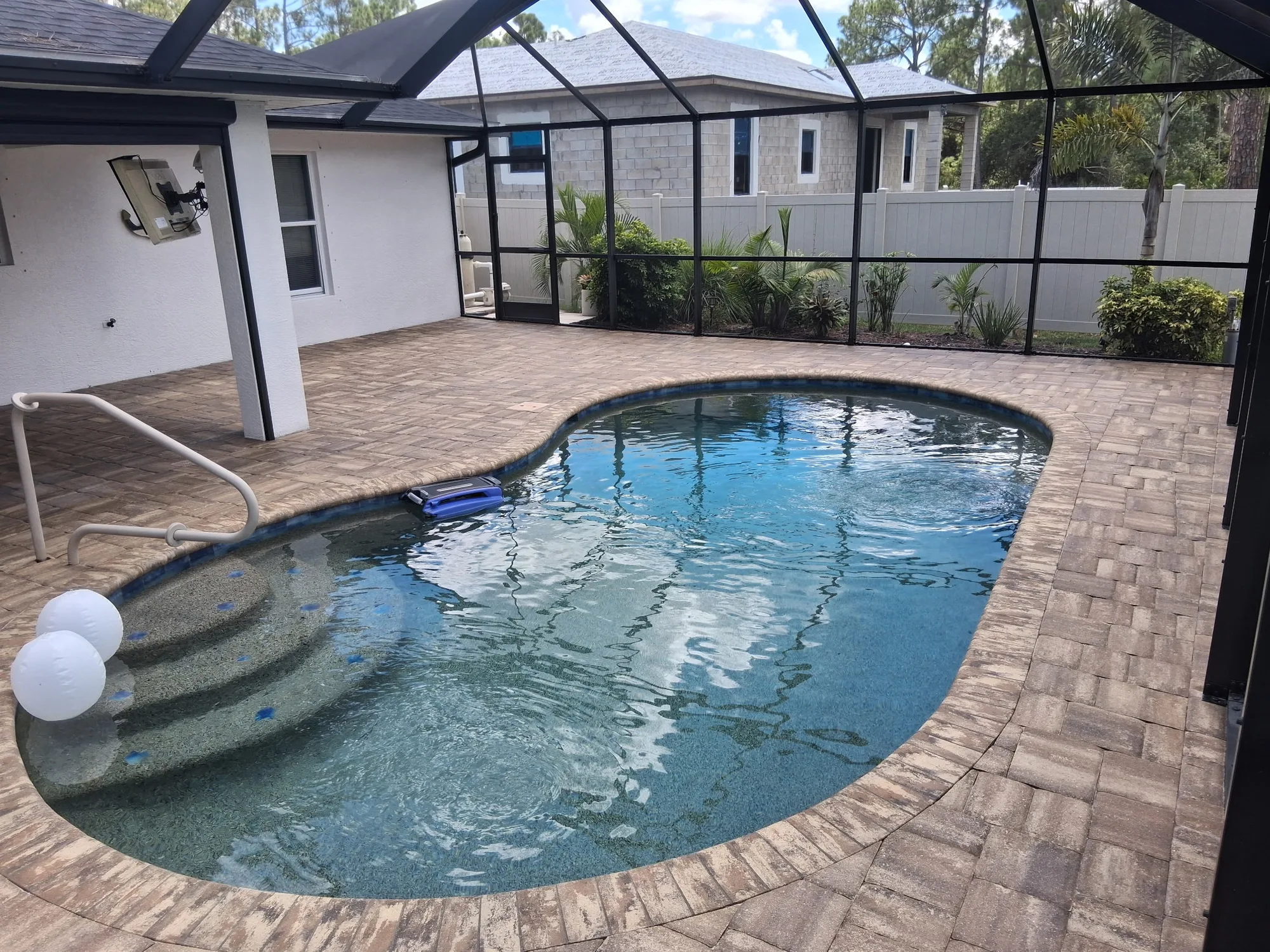
Called in for a simple re-seal. We stripped the old sealer, treated for organic growth and efflorescence, resanded, and sealed.
See the before and after →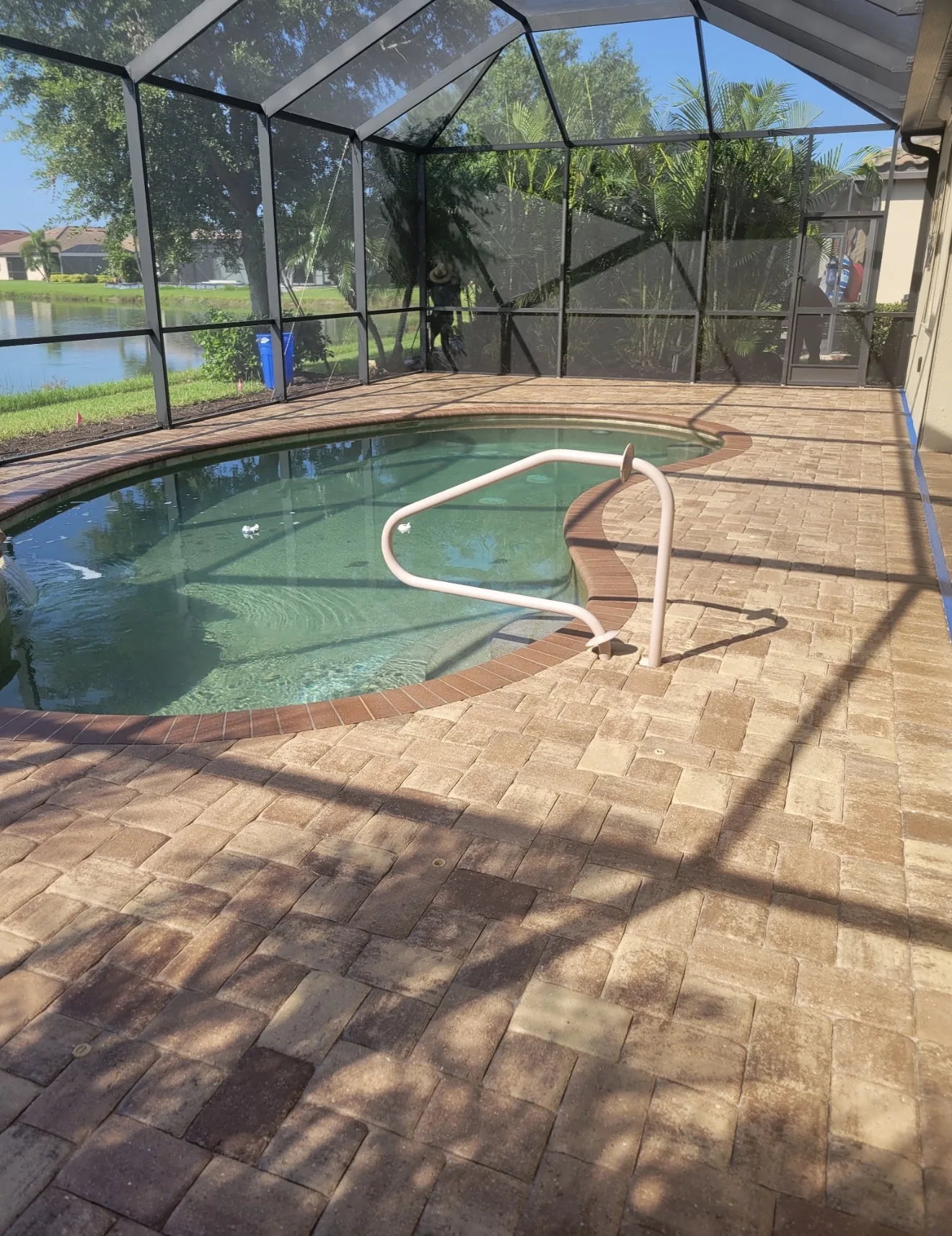
Called in to seal the patio, but all the old sealer had failed. We stripped it, treated for organic growth and efflorescence, re-sanded, and sealed.
See the before and after →We'll come out, look at the surface and give you a price before we leave. A written breakdown follows by email.
Thanks, we'll be in touch shortly. Need it sooner? Call us at (941) 237-8107.